
Waist to Height Ratio Calculator Guide: Measure Health Risk Accurately
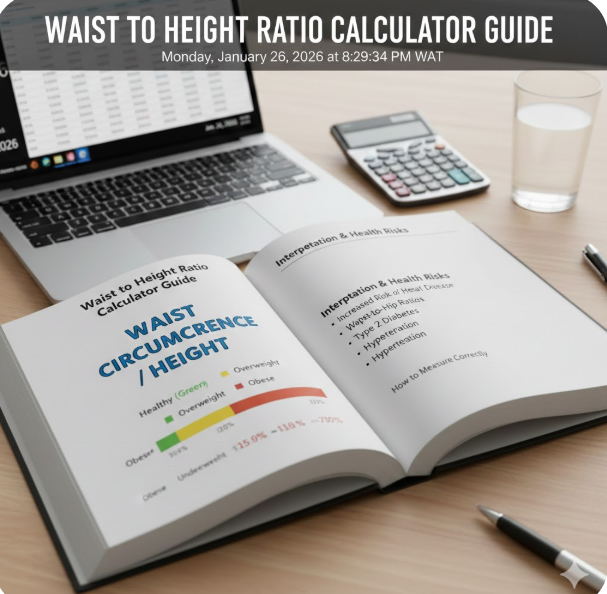
The Waist to Height Ratio (WHtR) is one of the most powerful yet underused health metrics available today. Unlike weight-based measurements, it focuses on abdominal fat—a major predictor of cardiovascular disease, diabetes, and metabolic disorders.
In this Waist to Height Ratio Calculator Guide, you’ll learn what WHtR is, how it’s calculated, why it often outperforms BMI, and how to interpret your results using a reliable calculator on dike.com.ng.
What Is Waist to Height Ratio?
Waist to Height Ratio is a simple measurement that compares your waist circumference to your height.
Formula:
Waist to Height Ratio = Waist Circumference ÷ Height
Both measurements must be in the same unit (cm or inches).
According to research published in The Lancet, WHtR is a stronger predictor of cardiovascular risk than BMI across different populations.
Why Waist to Height Ratio Matters More Than BMI
BMI only considers height and weight—it does not show where fat is stored. WHtR specifically highlights central (abdominal) obesity, which carries higher health risk.
Key Advantages of WHtR
- Directly measures harmful belly fat
- Works across genders and ethnic groups
- Simple and easy to calculate
- Better predictor of heart disease and diabetes
For comparison, see: BMI Calculator Explained
Waist to Height Ratio Calculator Explained
A waist to height ratio calculator automates the formula and instantly tells you whether your ratio falls within a healthy range.
What You Need to Calculate WHtR
- Your height
- Your waist circumference (measured at the navel)
Use our free tool here: Waist to Height Ratio Calculator
Healthy Waist to Height Ratio Ranges
| Waist to Height Ratio | Health Risk |
|---|---|
| Below 0.40 | Underweight |
| 0.40 – 0.49 | Healthy |
| 0.50 – 0.59 | Increased health risk |
| 0.60 and above | High risk (central obesity) |
A widely cited guideline is: “Keep your waist circumference less than half your height.”
How to Measure Waist Correctly
Incorrect waist measurement leads to inaccurate WHtR results.
Step-by-Step Waist Measurement
- Stand upright and relax
- Locate your navel
- Wrap the tape measure around your waist
- Do not pull tight
- Measure after exhaling normally
Waist to Height Ratio vs Other Health Metrics
WHtR works best when combined with other calculators.
As explained in our main guide, Ideal Weight Calculator Explained , no single metric should be used in isolation.
Who Should Use a Waist to Height Ratio Calculator?
- Adults assessing metabolic risk
- People with normal BMI but excess belly fat
- Individuals monitoring lifestyle changes
- Healthcare screening and counseling
WHtR is especially useful in populations where BMI may underestimate risk.
Frequently Asked Questions
What is a good waist to height ratio?
A ratio between 0.40 and 0.49 is generally considered healthy for adults.
Is waist to height ratio better than BMI?
For predicting cardiovascular and metabolic risk, WHtR often performs better than BMI.
Can children use waist to height ratio?
Yes. WHtR is suitable for children and adolescents and does not require age-specific charts.
How often should I check my WHtR?
Every 3–6 months is sufficient for monitoring changes.
Conclusion
This Waist to Height Ratio Calculator Guide highlights why WHtR is one of the simplest and most effective health screening tools available. By focusing on abdominal fat, it provides insight that weight-based metrics often miss.
When used alongside BMI, ideal weight, and body fat percentage, WHtR offers a more complete picture of metabolic health.
Get started now: Try the Waist to Height Ratio Calculator