The Master Guide to Body Metrics: Ideal Weight, Body Fat, and Ratios
The Master Guide to Body Metrics: Ideal Weight, Body Fat, and Ratios
Introduction: Moving Beyond the Scale
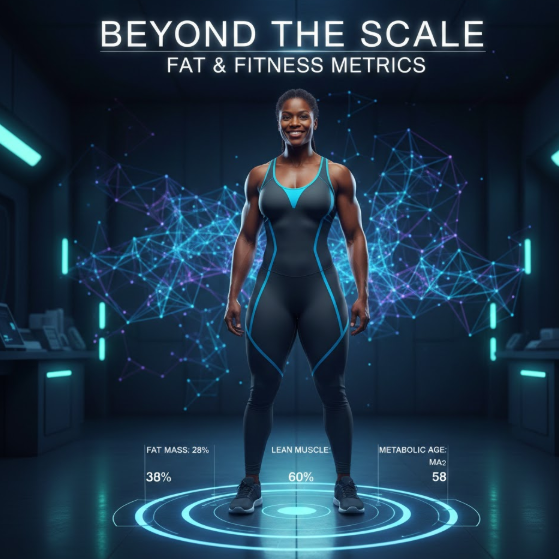
For decades, the bathroom scale was the only judge of health. If the number went down, you were “winning”; if it went up, you were “losing.” We now know this is a dangerous oversimplification. To truly understand your body, you must look at the quality of your weight, not just the quantity.

This guide covers the Ideal Weight Calculator, Waist-to-Height Ratio, and Body Fat Percentage. By the end of this 3,000-word deep dive, you will understand how to use these tools to build a high-definition picture of your internal health.
🟢 Table of Contents
- Ideal Weight Calculator: The Quest for Your Biological “Sweet Spot”
- Waist-to-Height Ratio (WHtR): The Most Important Metric You’ve Never Used
- Body Fat Percentage Explained: Muscle vs. Adipose Tissue
- Healthy Weight for Adults: Navigating the Lifecycle
- Gender-Specific Metrics: Men vs. Women
- Pediatric Growth: Healthy Weight for Children
- The Nigerian Phenotype: Cultural and Genetic Considerations
- The Beginners Guide to Online Health Calculators
- Privacy and Accessibility: Why “No Registration” is the Future
- Conclusion: Integrating Tools into a Daily Monitoring Routine
1. Ideal Weight Calculator: The Quest for Your Biological “Sweet Spot”
An Ideal Weight Calculator does not tell you what you should weigh to look good in a photo; it tells you the weight range where your risk of systemic disease is statistically lowest.
The Historical Formulas
Scientists have developed several formulas to calculate “Ideal Body Weight” (IBW). The most common are:
- The Devine Formula: Historically used to calculate dosages for medications.
- The Robinson and Miller Formulas: Refined versions that adjust for modern height-to-weight averages.
- The Hamwi Method: A popular “rule of thumb” used by nutritionists ($45kg$ for the first 5 feet of height + $2.3kg$ per inch thereafter).
Why “Ideal” is Individual
Your ideal weight is influenced by your frame size. A person with a “large frame” (thick wrists and broad shoulders) will have an ideal weight 10% higher than someone with a “small frame,” even if they are the same height. At dike.com.ng, we encourage using the BMI Calculator as a starting point, then narrowing it down with IBW formulas.
2. Waist-to-Height Ratio (WHtR): The Most Important Metric
If you only track one metric this year, let it be your Waist-to-Height Ratio. While BMI looks at total mass, WHtR looks at location.
The Danger of “Belly Fat” (Visceral Adiposity)
Fat stored around the hips (subcutaneous) is mostly an energy reserve. However, fat stored around the waist (visceral) is an active organ that pumps inflammatory chemicals into your liver and heart.
The Simple Rule: Keep Your Waist to Less Than Half Your Height
$$WHtR = \frac{Waist Circumference}{Height}$$
- A ratio of 0.5 or less is the goal.
- Example: If you are $180cm$ tall, your waist should be $90cm$ or less.
- Why it beats BMI: A “skinny fat” person might have a normal BMI but a high WHtR, indicating they are at high risk for a heart attack despite appearing “thin.”
3. Body Fat Percentage Explained: Muscle vs. Adipose
Your Body Fat Percentage is the total mass of fat divided by total body mass. This is the ultimate metric for fitness enthusiasts.
The Essential Fat vs. Storage Fat
- Essential Fat: Men need 2-5% and women need 10-13% just to maintain basic life functions (hormone production, organ cushioning).
- Athletic Range: Men (6-13%), Women (14-20%).
- Fitness Range: Men (14-17%), Women (21-24%).
- Obesity: Men > 25%, Women > 32%.
How to Measure at Home
While DEXA scans are the gold standard, you can use US Navy Method calculators available on our Body Measurement Tools section. These use neck, waist, and hip measurements to estimate fat with surprising accuracy.
4. Healthy Weight for Adults: Navigating the Lifecycle
As we age, our “Healthy Weight” target shifts.
- In your 20s and 30s: Focus on muscle density. Your BMI should be on the lower end of the “Normal” range.
- In your 50s and 60s: A slightly higher BMI (25-27) is often protective against bone fractures and muscle wasting (sarcopenia).
5. Gender-Specific Metrics: Men vs. Women
Men and women are biologically designed to store fat differently.
- Women: Have higher essential fat for reproductive health. A woman with 15% body fat may stop menstruating, whereas a man at 15% is considered very fit.
- Men: Tend to store fat viscerally (the “Oga Belly”). This makes men more susceptible to sudden heart events at lower BMIs than women.
6. Pediatric Growth: Healthy Weight for Children
For children, we never use adult “Ideal Weight” targets. We use Growth Percentiles.
- A child’s weight is compared to a reference group of 100 children.
- The 50th Percentile is the average.
- Warning Signs: If a child jumps from the 50th to the 95th percentile in one year, it indicates a lifestyle issue that needs immediate attention.
7. The Nigerian Phenotype: Cultural and Genetic Considerations
In Nigeria, our “Body Measurement Calculators” must account for diversity.
- Genetic Diversity: From the tall, lean frames in the Sahel to the more muscular frames in the South, one-size-fits-all “Ideal Weights” can be misleading.
- The Dietary Shift: As Nigeria urbanizes, we are seeing “Normal BMI” people with high “Waist-to-Height Ratios” due to high carbohydrate and sedentary lifestyles.
8. The Beginners Guide to Online Health Calculators
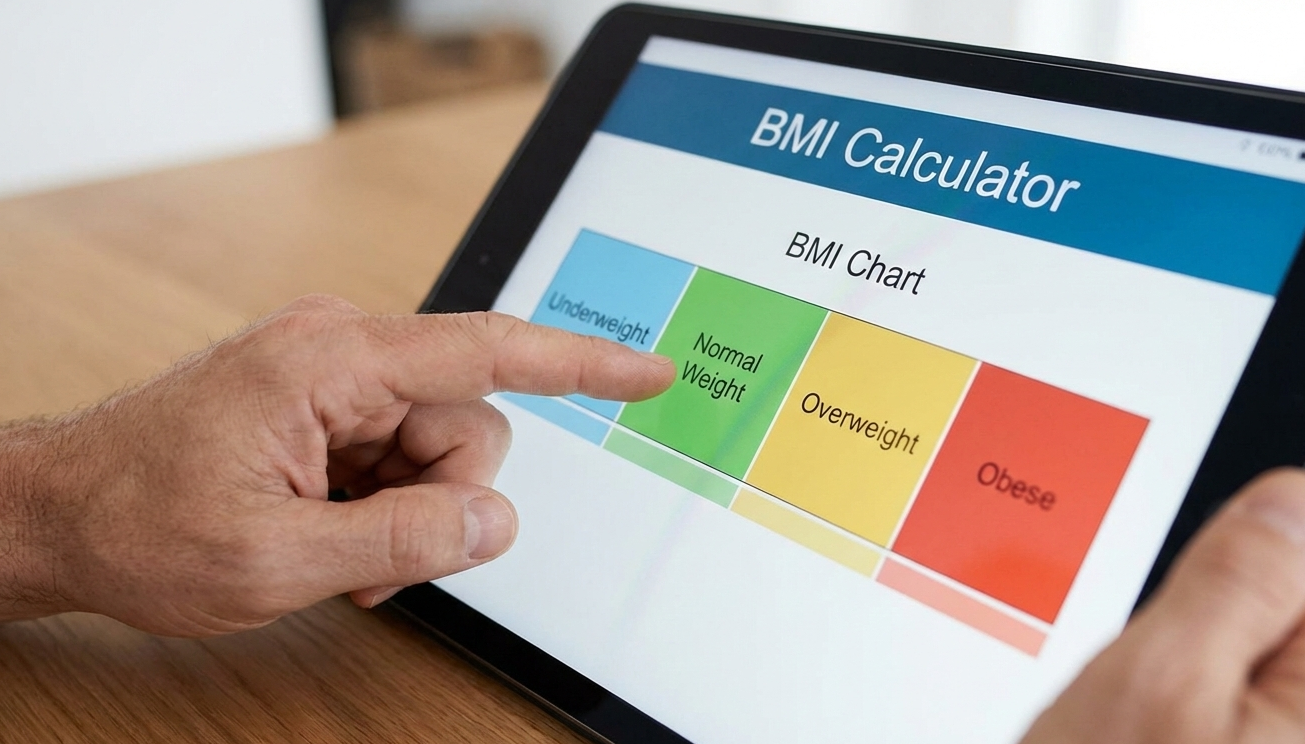
If you are new to this, start with the BMI Calculator. It is the most “Simple Health Tool” available. Once you are comfortable, move to the BMR Calculator to understand your calorie needs.
Why Use Online Tools?
- Instant Interpretation: They don’t just give a number; they explain it.
- Privacy: At dike.com.ng, we offer Health Calculators Without Registration. You don’t have to share your name to get your data.
9. Privacy and Accessibility: Why “No Registration” is the Future
Your health data is personal. Many sites use “Free Health Calculators” as “Lead Magnets” to steal your email. We believe Health Calculators for Nigerians should be open-access.
- No Registration = No Spam.
- No Login = Maximum Security.
10. Conclusion: Integrating Tools into Daily Monitoring
To achieve a healthy lifestyle, use these tools as a suite, not in isolation:
- Check BMI monthly for the “Big Picture.”
- Check Waist-to-Height Ratio quarterly to monitor heart risk.
- Use a Calorie Needs Calculator weekly to adjust your meal plan.
By using the Weight Management Tools on dike.com.ng, you are no longer guessing. You are measuring. And what gets measured, gets improved.
Internal Linking & SEO Strategy:
- Primary Tool: BMI Calculator
- Visual Aid: BMI Chart
- Further Reading: Healthy Weight Tips